RESEARCH
Columbia's Solvent Trick Could Unlock U.S. Lithium
Columbia engineers developed a reusable, temperature driven solvent system that recovers lithium from brine without chemicals or heavy processing.
19 Jun 2026
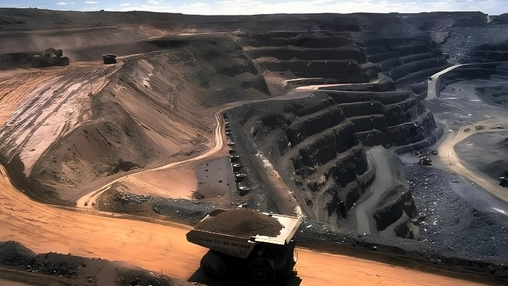
Beneath California's Salton Sea sits enough lithium to supply a meaningful chunk of U.S. demand. For years, it has stayed right there, underground and untapped, because pulling it out economically has proved maddeningly hard. A new extraction method developed at Columbia Engineering may finally change the math.
The system, called S3E, uses a solvent that responds to temperature shifts alone. Heat it up, and the solvent releases lithium. Cool it down, and it picks up more. No binding chemicals, no complex post-processing, and crucially, no need to discard the solvent after each cycle. Across four back-to-back runs using the same batch, the researchers recovered nearly 40 percent of available lithium, with performance holding steady throughout.
That last detail matters more than it might seem. Solvent degradation is a persistent headache in extraction chemistry. A system that holds its recovery rate across repeated cycles hints at operating costs that could look very different from anything currently on the market.
Ngai Yin Yip, associate professor of earth and environmental engineering at Columbia, called the method "fast, selective, and easy to scale." Selectivity has historically been the hard part. Geothermal brines are messy, full of competing ions that conventional processes struggle to isolate lithium from. S3E handles that problem through the physical behavior of lithium ions interacting with water molecules inside the solvent, a mechanism that is precise without being chemically heavy.
Battery manufacturers and EV producers have been watching domestic lithium supply chains with growing urgency. Most U.S. lithium currently comes from imports, and demand is accelerating faster than new supply is materializing. Geothermal brines represent a large, geographically concentrated resource, but the extraction technology to reach them economically has lagged. S3E, published January 21 in the journal Joule, represents a credible step toward closing that gap. Whether laboratory results survive contact with real field conditions remains the open question, but the fundamentals look cleaner than anything the Salton Sea basin has seen.
Related News


SUBSCRIBE FOR UPDATES
By submitting, you agree to receive email communications from the event organizers, including upcoming promotions and discounted tickets, news, and access to related events.